
What is Belbin® Team Roles Methodology?
Belbin Team Roles emerged from years of research led by Dr. Meredith Belbin at Henley Management College. The framework has been used globally across industries, supporting organizations in building more effective teams through evidence-based insights. Belbin® Team Roles helps individuals understand how to use their natural behavioral tendencies to contribute to team success. Rather than focusing on personality labels, Belbin examines observable workplace behaviors and the roles people naturally adopt when working with others. However, Belbin Team Roles are not just a measurement of people’s behavior at work; they are a definition of the different types of behavior required in the workplace to bring about success.
Belbin provides a practical way to understand strengths, communication styles, and collaboration patterns that impact team performance every day.
At its core, Belbin helps answer these simple but powerful questions:
How do people actually work together, and how can teams work better?

Why Belbin Matters
Most organizations invest heavily in developing individual talent. However, even highly capable individuals can struggle when team dynamics are unclear or misaligned.
Common challenges teams face include:
• Unclear roles and expectations
• Communication breakdowns
• Too many similar working styles or missing perspectives
• Conflict caused by misunderstood behavior rather than intent
Belbin shifts the focus from individual traits to collective effectiveness. By understanding how different contributions fit together, teams can reduce friction, improve communication, and perform more effectively.
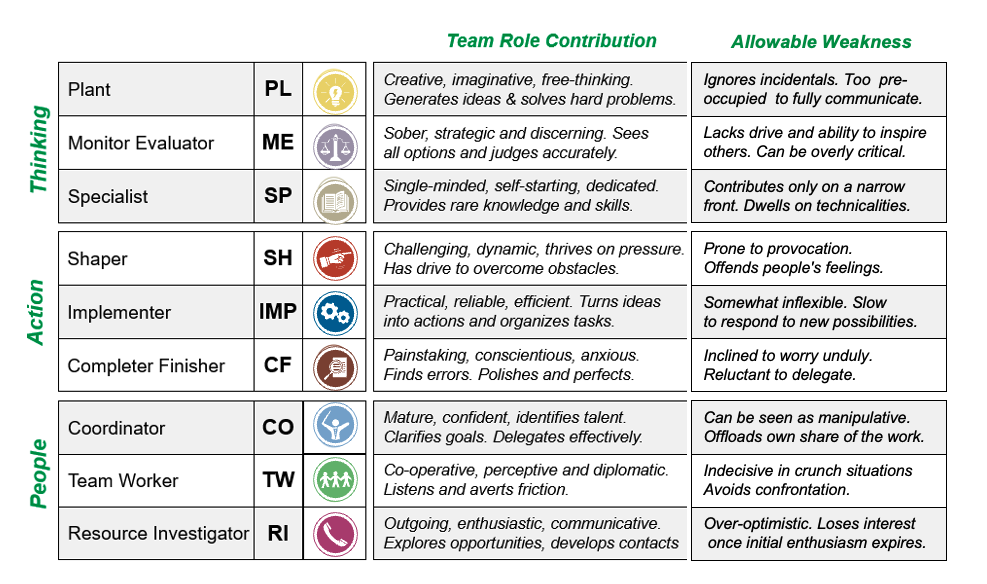
Understanding the Nine Team Roles
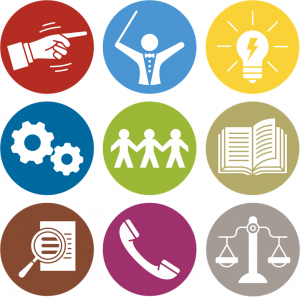
Belbin identifies nine distinct team roles that represent different ways individuals contribute to team success. These roles are not personality types or fixed categories. Instead, they describe behavioral tendencies that individuals may display depending on context, experience, and team needs.
Most people demonstrate a combination of roles, and effective teams benefit from a balanced mix of contributions across the nine roles. Success comes from understanding how different contributions complement one another and ensuring the team has a balanced mix of perspectives and behaviors.
Belbin helps teams:
• Recognize individual strengths and allowable weaknesses
• Appreciate different working styles
• Build complementary teams rather than identical ones
• Create shared language around collaboration
What Makes Belbin Different
Many assessments focus on personality or preferences. Belbin stands apart by focusing on observable behavior and real-world teamwork.
Key differences include:
• Behavior-based insights rather than personality labels
• Observer feedback that provides a 360-degree perspective
• Practical application to everyday work situations
• Emphasis on team effectiveness, not just individual awareness
Belbin moves beyond self-reflection to an actionable understanding that teams can use immediately.
How Organizations Use Belbin

Organizations use Belbin to strengthen collaboration and performance across a wide range of contexts, including:
• Leadership development
• Team formation and onboarding
• Improving communication and reducing conflict
• Project team effectiveness
• Role clarity and accountability
• Building shared team language
Because Belbin focuses on behavior, it translates directly into everyday workplace practices.
How Belbin Differs from Personality Assessments

Many organizations are familiar with personality or behavioral assessments such as DISC®, Myers-Briggs®, or StrengthsFinder®. While these tools can provide useful insights into individual preferences, Belbin focuses on something different: how people contribute to team performance in real working environments.
Rather than categorizing individuals into personality types, Belbin examines observable workplace behaviors and the roles people naturally adopt when collaborating with others.
Key differences include:
• Team-focused rather than individual-focused. Belbin emphasizes how people work together, not just who they are individually.
• Behavior-based insights. The framework is grounded in observable contributions rather than internal personality traits.
• Observer input matters. Belbin incorporates feedback from colleagues, providing a more complete picture than self-perception alone.
• Actionable for real work situations. Insights translate directly into improving communication, decision-making, and team effectiveness.
In short, while personality assessments help individuals understand themselves, Belbin helps teams understand how to work better together.